Golden Oak Produce on Farming with Place
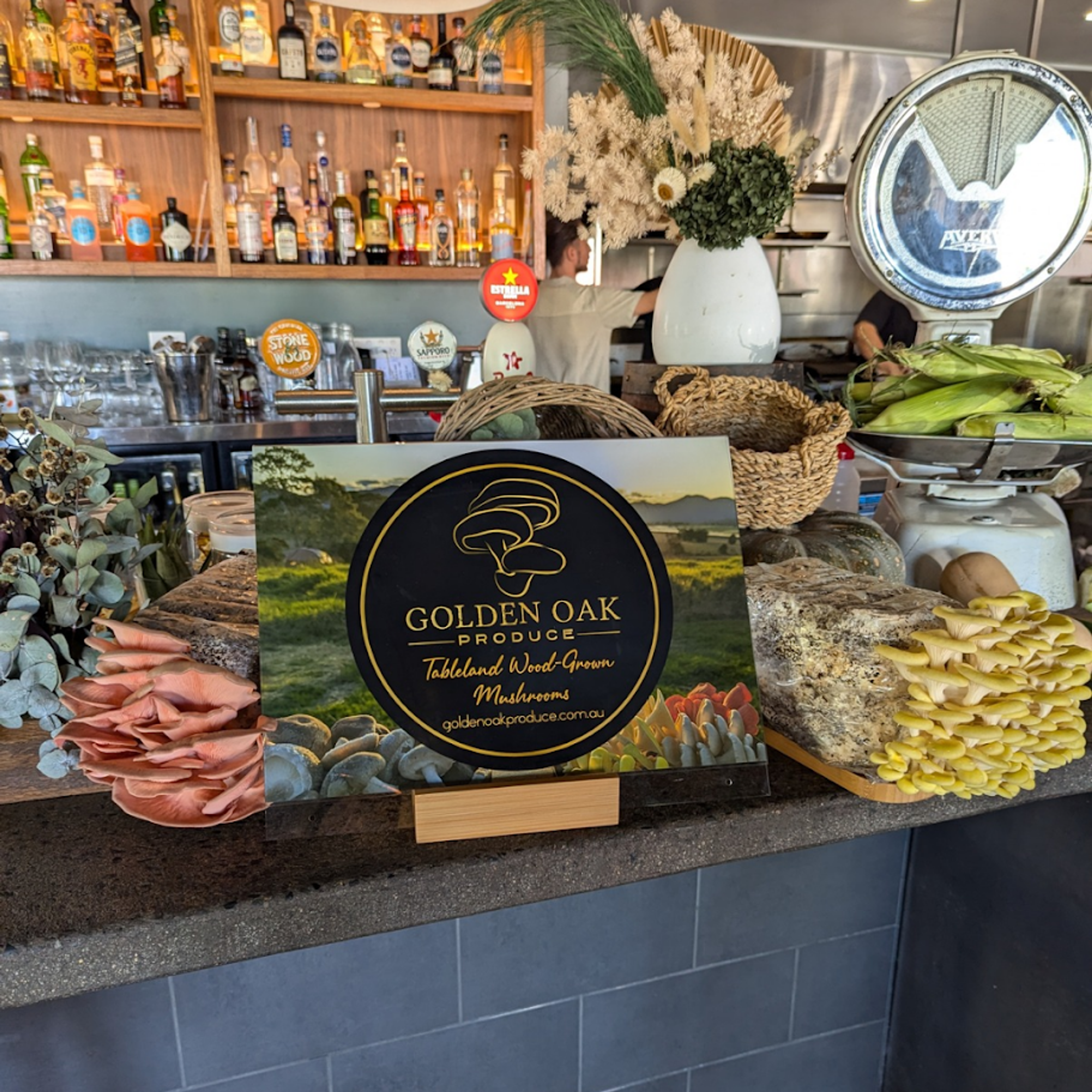
As I arrived toward the end of Golden Oak Produce’s June Farm Gate Sales, I was disappointed that Tom and Ashleigh had sold out of fresh mushrooms for the day. A few gourmet grow blocks remained, bursting with impressive flushes of blue, pink, yellow, and white mushrooms.
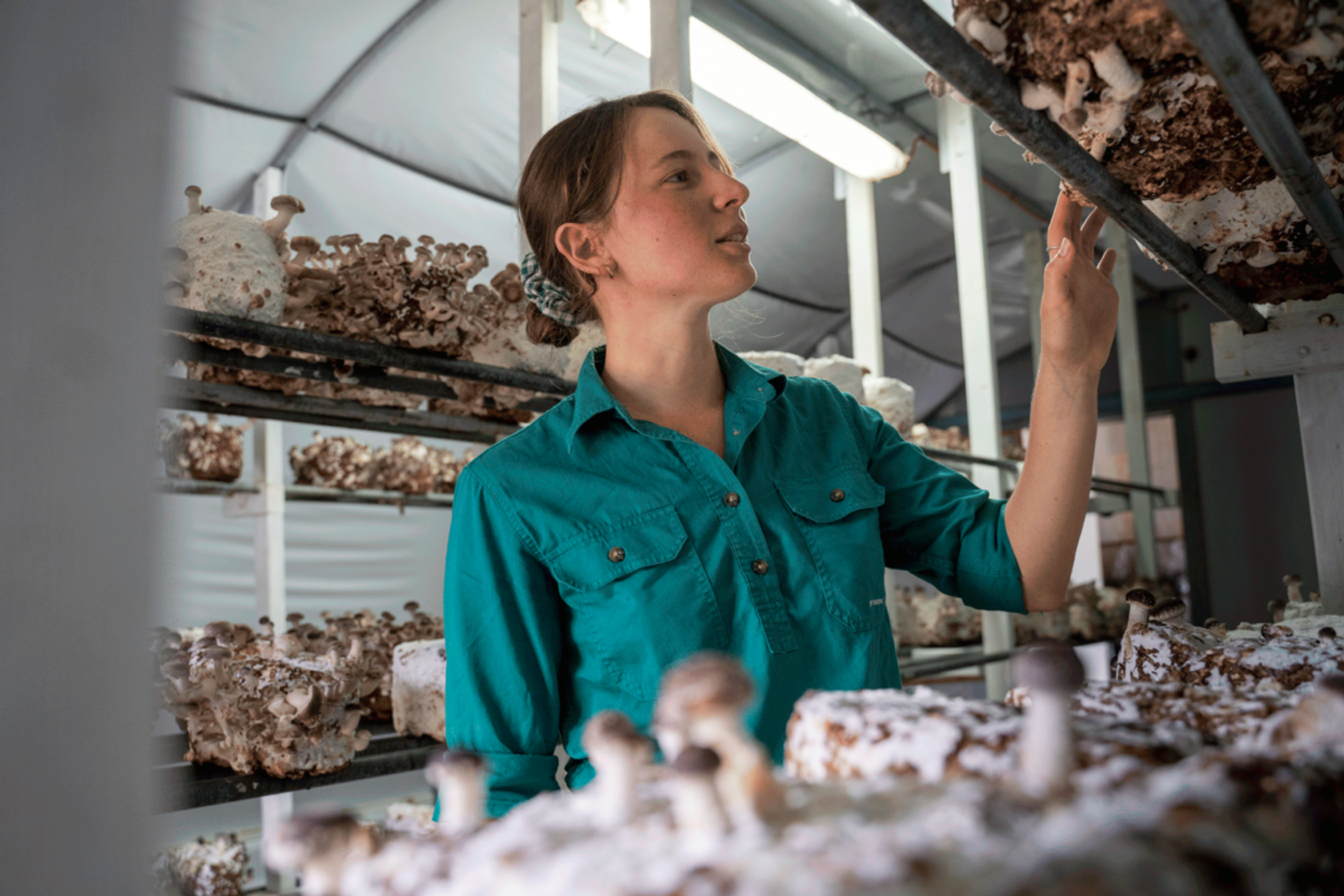
Golden Oak supplies Far North Queensland with quality wood-grown mushrooms from their family-run farm in Upper Barron, on the beautiful Atherton Tablelands. They also attend at least three local markets each month and supply a number of local stockists, cafés, and restaurants.
Name: Tom O'Connor
Location: Upper Barron, Queensland
Produce: Mushrooms and Dairy Goats
Duration: 5 years
How long have you been farming in a way that considers the environment as central to your practices?
We’ve been mushroom farming for 5 years, but I’ve been dairying since I could walk, I guess. I grew up on a dairy farm and worked on others as an adult.
We’ve definitely considered the environment with everything we do here for the whole 5 years. We chose to use an agricultural waste product as the basis for our business. It’s sort of a no-brainer to grow mushrooms in a sustainable way. Our farming model lends itself to making gentler choices, to look after and improve this land - not just for the purpose that we’re using it for now, but for any future uses of this land.
How did you make these choices? What resources did you lean on to help you?
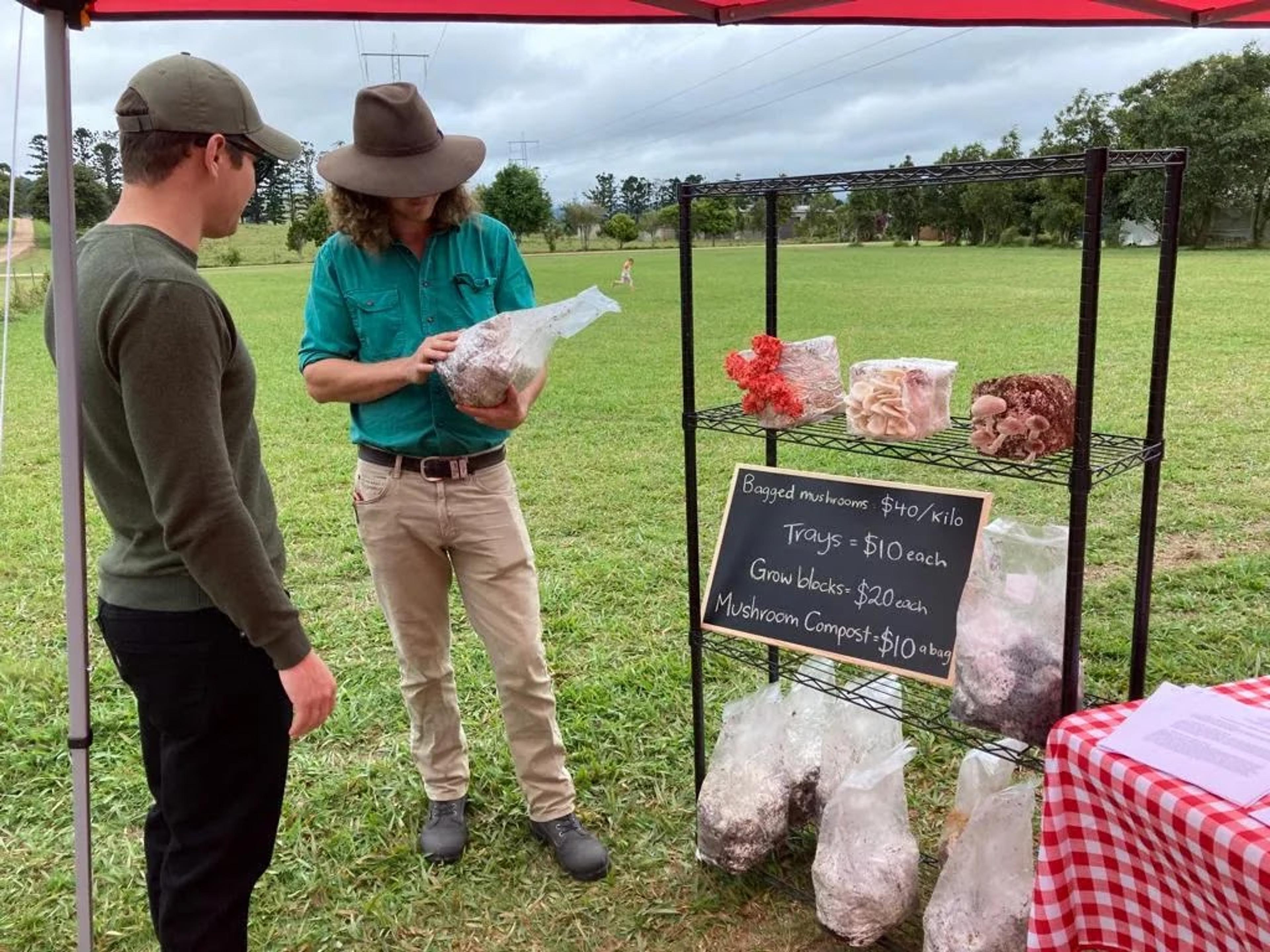
There wasn’t a structured course or manual for us to learn from, but for me, certainly a lot of self-led learning - YouTube, searching online, and reading articles and books. I relied on the generosity of other growers who shared what they were doing. I think it’s a really big thing in the mushroom world, specifically, to really share in an open-source way - helping each other along rather than treating other growers like competitors on a local, national, and even global level. It’s a pretty good industry in that almost everyone is really willing to share information, and that, of course, inspires us to share more as well. Farm gate sales and markets, for example, are as much about encouraging people with recipes and cooking techniques, and sharing mushroom-growing tips, not just selling mushrooms from our farm. An increasing number of locals are interested in growing mushrooms not only for themselves, but also for others around them. We're happy to encourage them by guiding the way that we think it should be done, as opposed to recommending spraying everything with formaldehyde and popping some spores in!
What practices have you implemented and modified to suit your farm’s unique needs?
We’ve definitely worked a lot on substrate recipes - eliminating things that we think aren’t great to include in a food production system. We’re trying to grow a diverse range of mushrooms to increase resilience not only to market changes, but also to potential threats that could wipe out a specific species of mushroom, for example. Most of the cultures we’ve introduced are ones that would naturally occur in this area, so there’s less need for energy- intensive temperature control. They’re mushrooms that are native or naturalised in our environment, so we’re not bringing in potentially invasive species.
Do you think that your growing methods lend themselves to a more productive farm, such as bigger yields or is that your payoff for making the choices you do?
By learning to grow, for example, Queensland Oyster Mushrooms well here, a local culture, we have far more success than trying to shoehorn something more exotic into our environment. That naturally leads to a more productive and self-regulating system.
I think that mentality is applicable to lots of different things - a preference for guiding what naturally thrives here and using the substrate products that are readily available rather than bringing in something else just because it’s sought-after.
What challenges have you faced in adopting sustainable practices, and how have you overcome them?
I think trial and error is expensive! Especially in farming, I think you have to accept a lot of failures on the path to a much better system. That’s hard - it’s mentally hard as well as financially hard! Ultimately, I think it’s better to keep trying, but there have been plenty of points where we could have just given up and decided to fumigate everything and grow just one strain of shiitake, for example.
What advice would you give to other farmers interested in transitioning to practices that centre the environment?
There are going to be failures in any system; be open to the failures that exist in this system. Don’t treat it as a failure of the overall system - continue to work on the problems and come up with a better solution, as opposed to finding a ‘bigger hammer’, or abandoning the pursuit. For someone who’s looking at a more sustainable way of farming, they have to be prepared for different kinds of failures. It will lead to better results, so don't give up!
How does the goat dairying fit in with the mushroom farm - why goats?
Ash loves the goats. And I guess I’ve fallen in love with the goats! They’re fantastic for reclaiming and regenerating land. We’re pretty keen for a cut and carry system here - growing what they need and bringing it to them, rather than having them out on paddocks too much. So, less of an intensive grazing system and more of a managed fodder harvest. Goat manure is less of an issue to deal with than with cattle - it’s basically a slow-release fertiliser. Soil compaction is also much less of an issue with goats - their hooves penetrate rather than compact. Goats not only require less water, but they also offer fantastic feed efficiency. We’re keen to further develop what we have here - devise a regenerative fodder system suited to the subtropics, specifically for goats. One that’s constantly improving the quality of the soil and the yields that we get from it. We hope to be able to grow a variety of species and offer different nutrient profiles to the goats, aligning with the drastic season changes we have here, so that we can take care of the needs of the herd and the land.
So, as for how goats fit in with the mushroom farm, there are a few crossovers - the people involved, the passion! There are fungi that we can grow that can be used for parasite control, as opposed to using a chemical control method. There are also fungi that can be grown as fodder that’s very nutritious, including different substrates that can be consumed by the goats after they have produced mushrooms, so we're excited to explore more options there. The mushroom compost we use and sell is complemented by the waste from the goat shed to create a more complete food for trees and gardens here.
What is your favourite mushroom to eat?
Fried Queensland Oyster Mushrooms!