
Navigating Leadership Transitions in Community-Run Organisations
Community-run enterprises play a vital role in relocalising food systems and fostering thriving, resilient communities. These include food co-ops, community gardens, and farmers’ markets that bring people together around sustainable food and farming practices. Yet, leading these organisations is no small task. Unlike profit-driven ventures, community-run enterprises operate with a values-driven approach that brings its own set of complexities.
The success of such organisations often hinges on the dedication of a founding leader—someone who anchors the vision and navigates through a dynamic mix of staff and volunteers. However, when a leader burns out or needs to step away, the organisation’s future can hang in the balance. Leadership transitions can make or break a community-run enterprise, but with proactive planning and strong systems, they can be navigated successfully.
To better understand the challenges and opportunities of leadership transitions, we spoke with Chris Ennis from CERES, Jade Miles from Beechworth Food Co-op, and Shingi Nyabonda and Deb Bogenhuber from the Food Next Door Co-op. Their insights reveal key lessons for other organisations preparing for similar changes.
How to Prepare for Leadership Transitions
Start Succession Planning Early and Redistribute Responsibilities
Leadership transitions are smoother and more effective when responsibilities are redistributed and future leaders are prepared well in advance. One key strategy is to gradually involve team members in leadership tasks and decision-making, long before a transition occurs. CERES exemplifies this approach by intentionally cultivating new leadership through opportunities for learning and responsibility-sharing. Chris Ennis, Director of Business Innovation at CERES shares, “The inoculative sort of way we immerse our leaders gradually exposes them to the tough decisions and the painful compromises we all have to make as leaders in the not-for-profit sector, mostly which our people are protected from when they are part of the team.” This approach also ensures institutional knowledge is retained, and new leaders are equipped to navigate challenges when the time comes.
Another key long-term strategy for community-run enterprises is to distribute leadership tasks across a team. This creates a more resilient and sustainable structure by reducing reliance on a single individual. It also fosters collaboration, encourages diverse perspectives, and leads to more balanced decision-making. By empowering team members to take on leadership roles gradually, leaders can build confidence, competence, and a culture of shared ownership. This not only strengthens the organisation’s ability to manage transitions but also ensures that its mission and values remain at the forefront as leadership evolves.
Key Strategy: Actively involve team members in leadership tasks and decision-making. Establish clear systems for distributing responsibilities and provide training and support to help team members take on these roles effectively.
Waiting Until a Leader is Burnt Out is Too Late
Running a community organisation is a tremendous amount of work. For those in leadership positions, it often involves countless volunteer hours on top of their job, family and other commitments. Jade Miles was the former president of Beechworth Food Co-op and dedicated 30-40 unpaid hours weekly for several years. This was entirely unsustainable. It led to serious burnout that forced her to step away and impacted her health long after she had left the co-op. Miles says, “I was totally burnt out. You can’t do 40 hours a week for no money on top of all your other things. And I did that for 7 and a half years. That’s a bloody long time. I was so fatigued. I could barely function for 2 years after it.”
This story is very common and unfortunately, it can negatively impact the success of incoming leadership. When a leader gets to the point of burnout, they are unable to give the time and energy required to onboard a new leader and this can set the organisation back as a whole.
Key Strategy: Put measures in place to ensure the workload is as sustainable as possible. Develop strategies to recognise and address the initial signs of burnout before it gets out of hand.
Do the Handover Right
Having clear processes and detailed handover materials is critical for a successful leadership change. However, often the outgoing leader holds intricate knowledge and deep relationships that can’t possibly be handed over in documentation or a meeting. If there is time and resources, a long handover period is ideal. It allows the new leader to pick up on all the nuances of the job and start forming relationships with key people within and outside the organisation. Deb Bogunhuber, the former Executive Officer at Food Next Door, offered some advice to new leaders: “If the outgoing leader has the capacity and the energy, it's a good thing to keep them in your back pocket as long as you can and just keep that connection.”
If a longer handover isn’t possible, openly communicate with stakeholders about the leadership change. Highlight the new leader’s dedication to the organisation’s mission and be transparent about the time required to build relationships with key stakeholders. By setting clear expectations from the outset, you can help everyone navigate the transition with understanding and patience.
Key Strategy: Maintain comprehensive records of organisational operations, governance, and community relationships. Ensure new leaders have access to this knowledge to preserve continuity. Plan a detailed handover and where possible, ensure that the incoming leader is spending a considerable amount of time shadowing the outgoing leader. Open communication with stakeholders about the transition is essential.
Prioritise Strong Governance
A robust board plays a key role in guiding organisations through transitions, ensuring stability and continuity. Strong governance can help prevent over-reliance on any one individual by ensuring that critical information and responsibilities are shared. Shingi Nyabonda, the current Executive Officer at Food Next Door emphasised the importance of the board being well-informed about the organisation’s operations, finances, and strategy to provide essential support to the incoming leader. Additionally, strong and established accountability processes enable a leader to step into the role with clarity and confidence, knowing they have the necessary structures and support in place to succeed.
Key Strategy: Build a governance team with diverse skills and clear accountability structures. Ensure the board is actively involved in succession planning and decision-making.
Stay True to Core Values
Community-run enterprises thrive by fostering deep connections and nurturing the well-being of their communities, making it vital for new leaders to recognise and preserve this unique dynamic. Unlike traditional businesses, these organisations are often driven by passion and a commitment to community impact, rather than solely financial outcomes. New leadership that prioritises profit over purpose risks eroding the foundation that sustains the organisation. This can result in volunteers, members, and customers disengaging, leading to both financial struggles and a loss of community support. Beechworth Food Co-op’s experience highlights this risk: when community-building activities were reduced by new leadership, the organisation’s distinctive value and connection to its community were significantly weakened
Nyabonda further stressed the need for the incoming leader to be deeply connected to the organisation’s mission: “If you personally don't align with the mission of the organisation, I think you're better off leaving it alone because the social enterprise sector is equally as brutal as the corporate world in many respects.” Passion for the mission is critical, as it provides the energy and resilience required to overcome challenges.
Key Strategy: Ensure new leaders deeply understand and uphold the organisation’s core values and community connections.
Be Open and Transparent
For new leadership to succeed, it is crucial they have a clear understanding of the enterprise’s overall health before stepping into the role. This means recruiters must provide open and transparent information about operations, finances, and any other critical details that enable candidates to make an informed decision about their suitability for the position. Without a clear picture of the organisation’s current state and the challenges ahead, new leaders are less likely to thrive, potentially leading to short tenures. Such instability can leave the enterprise vulnerable to disruption and its associated risks.
Key Strategy: Maintain openness and transparency throughout the recruitment process, providing clear details about the role and answering candidates’ questions honestly.
Turning Leadership Transitions into Opportunities
Leadership transitions are inevitable, but with the right planning and support, they can become opportunities for growth and renewal. For community-run enterprises preparing for change, the focus should be on cultivating relationships, preserving values, and empowering future leaders to carry the mission forward.
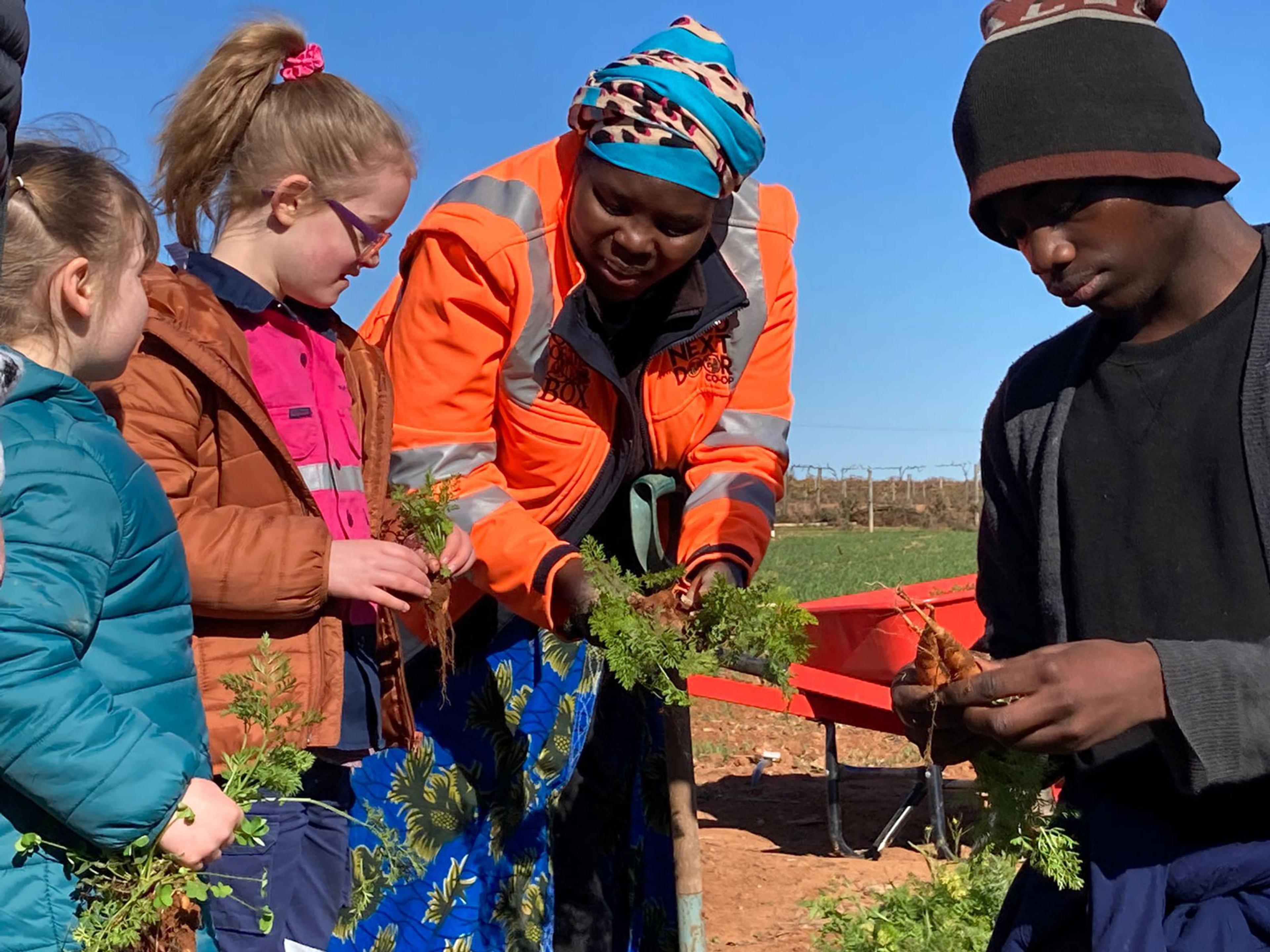
Image credit (left): Open Food Network
Image credit (right): Food Next Door